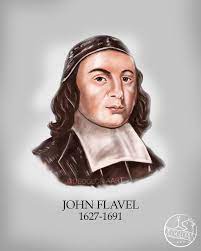
As well as Puritanism as a whole having been intensively investigated over the past few decades, numerous studies of Puritan preaching have also come out. Nevertheless, none of these has investigated the Puritan view of the effectual call as it relates to the matter and manner of Puritan preaching. Boone has remedied this deficiency, researching the works of the late seventeenth-century Puritan John Flavel (c. 1628–1691) to address this question. Boone rightly characterizes Flavel as an evangelistic preacher. We can say that all Puritans had this emphasis, but it was especially prominent in Flavel.
Flavel held a prominent place among the Puritan preachers of his days. The American theologian Jonathan Edwards was highly influenced by him, quoting him very frequently. A century later, Archibald Alexander, the first professor of Princeton Theological Seminary, felt a great debt to Flavel. He once wrote: “To John Flavel I certainly owe more than to any uninspired author.”
Flavel’s writings echo the importance that Puritans paid to the role of the affections in the process of a person’s moving from an unconverted to a converted state. Boone shows that the often-criticized distinction between intellect (conscience included), will and affections was used by the Puritans in a very practical way. For them, this was a means in seeking to understand how God would have them preach.
In effectual calling, the intellect is illuminated. Hence, preaching must be informative; however, the imparting of information is not an aim in itself. The second step of effectual calling is conviction of sin: men must realize their sinfulness in the light of the holy majesty of God. No-one arrives at saving faith without having first been convinced of his sin and misery. Faith takes place once the will is renewed, according to Flavel. The renewing of the will is the final step of effectual calling. Although the will is the primary seat of faith, this does not exclude a role for the mind and the affections.
Flavel did wish to inform the head, or intellect, in his sermons. In informing his hearers of the holiness of God and the vileness of sin, he sought to stir their emotions or affections to compunction of their sins and that they would desire Christ as their Savior. This appeal to the affections was made in the context of the aim of renewing the will. The ultimate aim was that the hearer would consent to accepting Christ as his only Savior.
It is important to note that neither Flavel nor the other Puritans saw the appeal to the sinner as inconsistent with their predestinarian theology. consider this study of Boone’s a highly valuable contribution. It highlights how the Puritan interest in theology was very practical in nature. Their great aim was to win souls and edify saints. Boone’s study pays most attention to the former aspect, and this is precisely because he focuses on the effectual call.
Clifford B. Boone, Puritan Evangelism. Preaching for conversion in late-seventeenth century: English Puritanism as seen in the works of John Flavel (Milton Keynes: Paternoster, 2013), paperback, xviii + 278 pp., £29.99 (ISBN 9781842277843)
 Dr. P. de Vries - artikelen en opinie